Singapore, July 7, 2026 — STATS ChipPAC and the Singapore Hybrid-Integrated Next-Generation µ-Electronics (SHINE) Centre at the College of Design and Engineering (CDE), National University of Singapore, have formalized their research partnership with the signing of a Research Collaboration Agreement (RCA) on photonic packaging technologies for next-generation semiconductor applications. Building on the Memorandum of Understanding signed in 2025, the agreement marks the next phase of a shared effort to develop manufacturing technologies that will enable future generations of photonic and semiconductor systems. The collaboration supports the objectives of Singapore's Semiconductor Research, Innovation and Enterprise (RIE2030) Flagship by strengthening national capabilities in semiconductor manufacturing science, heterogeneous integration, and photonic technologies.

The rapid growth of artificial intelligence (AI), high-performance computing (HPC), and data-centric applications is placing unprecedented demands on data movement within and between semiconductor devices. Optical interconnect technologies are emerging as a key enabler of next-generation computing by delivering higher bandwidth, lower latency, and improved energy efficiency than conventional electrical interconnects. Realizing these benefits at scale requires innovative packaging, integration, and test solutions that support high-volume manufacturing.
The collaboration brings together STATS ChipPAC's expertise in advanced semiconductor packaging, system integration, manufacturing, and testing with the SHINE Centre's multidisciplinary research capabilities in silicon photonics, heterogeneous integration, advanced manufacturing processes, and optical interconnect technologies. As a university-industry research initiative, SHINE provides a collaborative platform that accelerates the translation of research innovations into manufacturing-ready semiconductor technologies. Together, the partnership supports the development of future packaging and integration technologies that strengthen STATS ChipPAC’s ability to deliver system-level solutions for customers.
The joint research will focus on developing pluggable Fiber Array Unit (FAU) technology to enable wafer-level optical testing before final assembly. Early optical characterization allows known good dies to be identified prior to packaging, improving manufacturing yield, reducing unnecessary assembly of defective devices, and supporting reliable, scalable photonic system integration.
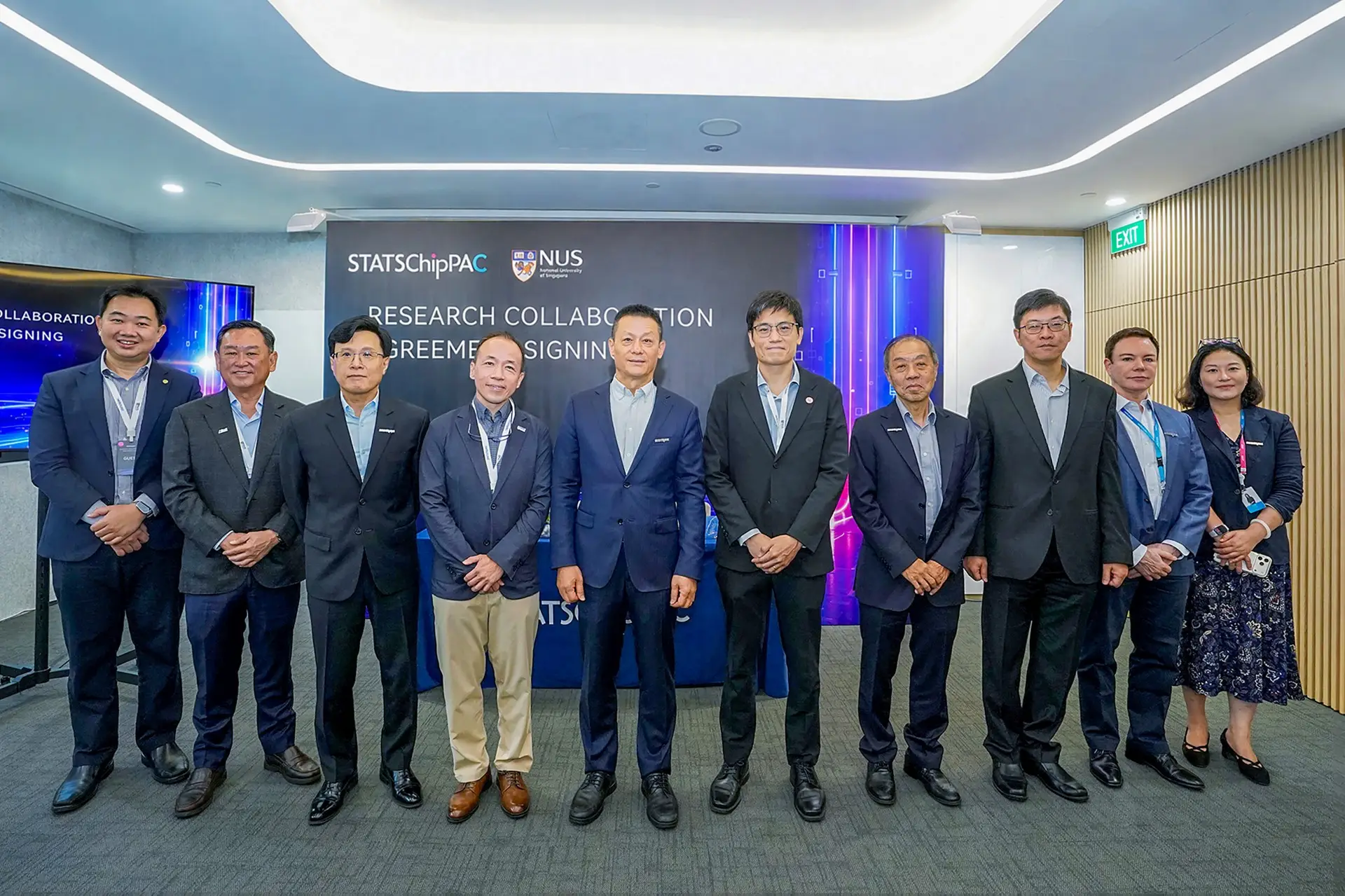
The RCA was signed in the presence of senior management, researchers, and engineers from STATS ChipPAC and NUS SHINE, underscoring the shared commitment of both organizations to advancing next-generation photonic packaging technologies through long-term collaborative research and technology development.
The collaboration will also provide opportunities for researchers, graduate students, and engineers to participate in joint research projects, technology development, knowledge exchange, and industrial attachments. By combining academic excellence with industrial expertise, the partnership strengthens STATS ChipPAC’s long-term innovation capabilities while supporting talent development and continued innovation across Singapore’s semiconductor ecosystem.